What are the different types of Pain?
Pain is one of the most common reasons people seek care, and one of the most frustrating things to live with, because it doesn’t always behave the way we expect. You can have pain that flares with movement, pain that burns or zaps for no obvious reason, or pain that seems to “spread” and linger even after an injury has healed. Learning that pain comes in different types can be empowering, because it helps explain why you feel what you feel and why certain treatments work better than others. While only a qualified clinician can diagnose the cause of your pain, understanding the basics can help you describe symptoms more clearly and take a more active role in your recovery.
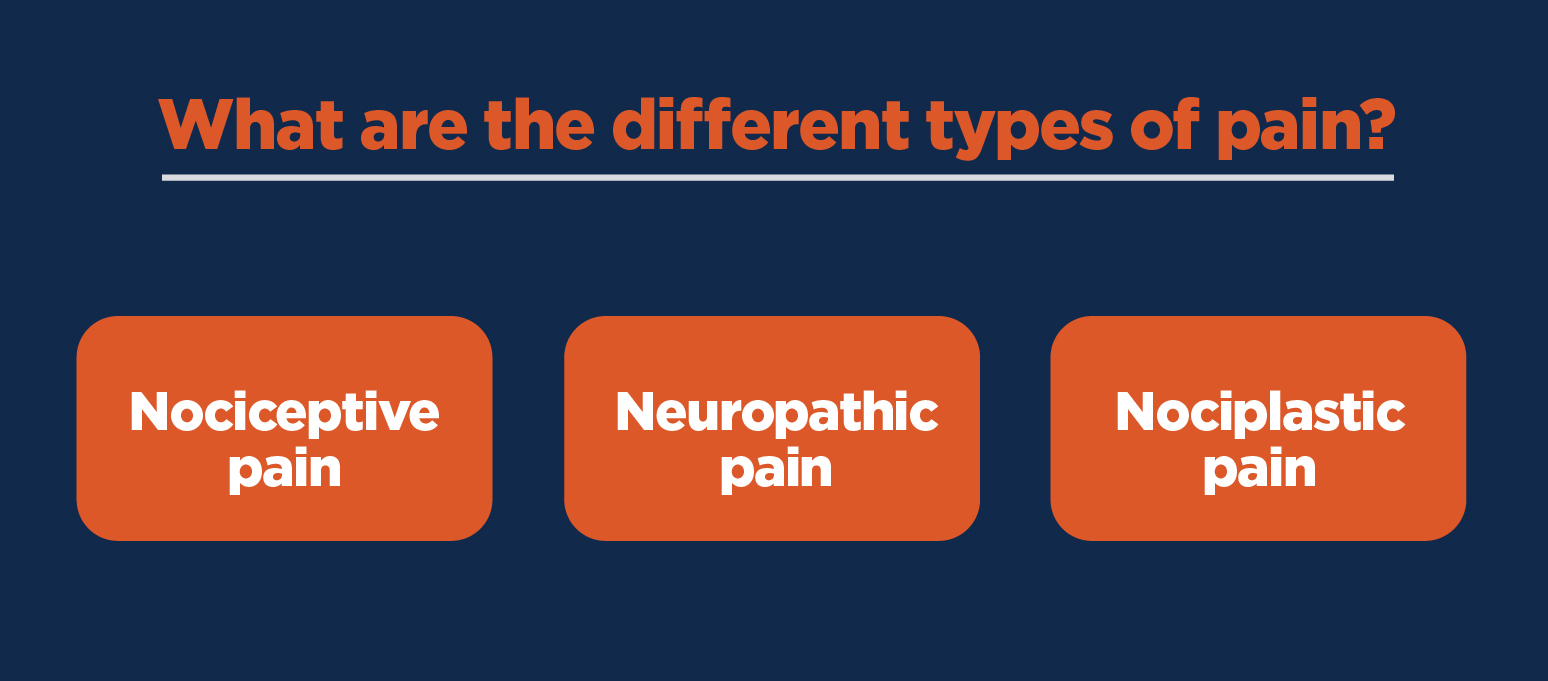
Nociceptive pain is the kind most people think of first – pain caused by actual or threatened tissue damage. It often comes from things like a sprain, strain, arthritis-related irritation, inflammation, or post-surgical healing. This pain is frequently described as aching, sore, throbbing, or sharp with certain movements. It may be localized to one area and often makes sense in the context of a known injury or condition. When you rest the area, protect it, or treat the underlying tissue issue, nociceptive pain often improves over time – especially when paired with a smart plan for gradual return to movement.
Neuropathic pain is different because it comes from a problem in the nervous system itself – a lesion or disease affecting nerves. People commonly describe neuropathic pain as burning, tingling, electric shocks, numbness, or “pins and needles.” It may travel along a nerve pathway (for example, down an arm or leg) and can be triggered by light touch, temperature changes, or even clothing. Examples can include nerve compression, certain types of neuropathies, or pain after nerve injury. Because this pain involves nerve signaling, it may respond best to treatments that specifically address nerve health and nerve sensitivity rather than only focusing on muscles or joints.
Nociplastic pain can be the most confusing, because it arises from altered nociception – meaning the way your body processes pain signals has changed – even when there’s no clear ongoing tissue damage or nerve disease. This doesn’t mean the pain is “in your head.” It means your nervous system has become more sensitive, like a car alarm that goes off too easily. Nociplastic pain can feel widespread, persistent, and out of proportion to what imaging or exams show, and it may be closely tied to factors like poor sleep, stress, fatigue, and past pain experiences. For many people, the most helpful approach is a broader plan that may include graded activity, pacing, sleep support, stress management, and therapies aimed at calming the nervous system.
Finally, mixed pain means more than one type is happening at the same time – often a combination of nociceptive and neuropathic pain. This is common in real life. For example, someone might have joint pain from arthritis (nociceptive) plus nerve irritation that causes tingling or shooting symptoms (neuropathic). Mixed pain can be tricky because it may not improve with a single strategy. The best plan often combines approaches – addressing tissues and movement patterns while also supporting nerve-related symptoms and overall pain sensitivity.
If you’re not sure what type of pain you have, you’re not alone – and you don’t have to figure it out by yourself. A good next step is to track your symptoms for a week: where you feel pain, what it feels like (aching, burning, sharp), what triggers it, what relieves it, and whether sleep, stress, or fatigue changes it. Bring that information to your clinician or physical therapist; it can help them sort out likely mechanisms and build a plan that fits your body and your goals. The most important message is this: different pain types often require different tools, and understanding the “why” behind your pain can be the first step toward lasting relief and better function.