H-Wave Therapy Shows Improved Function
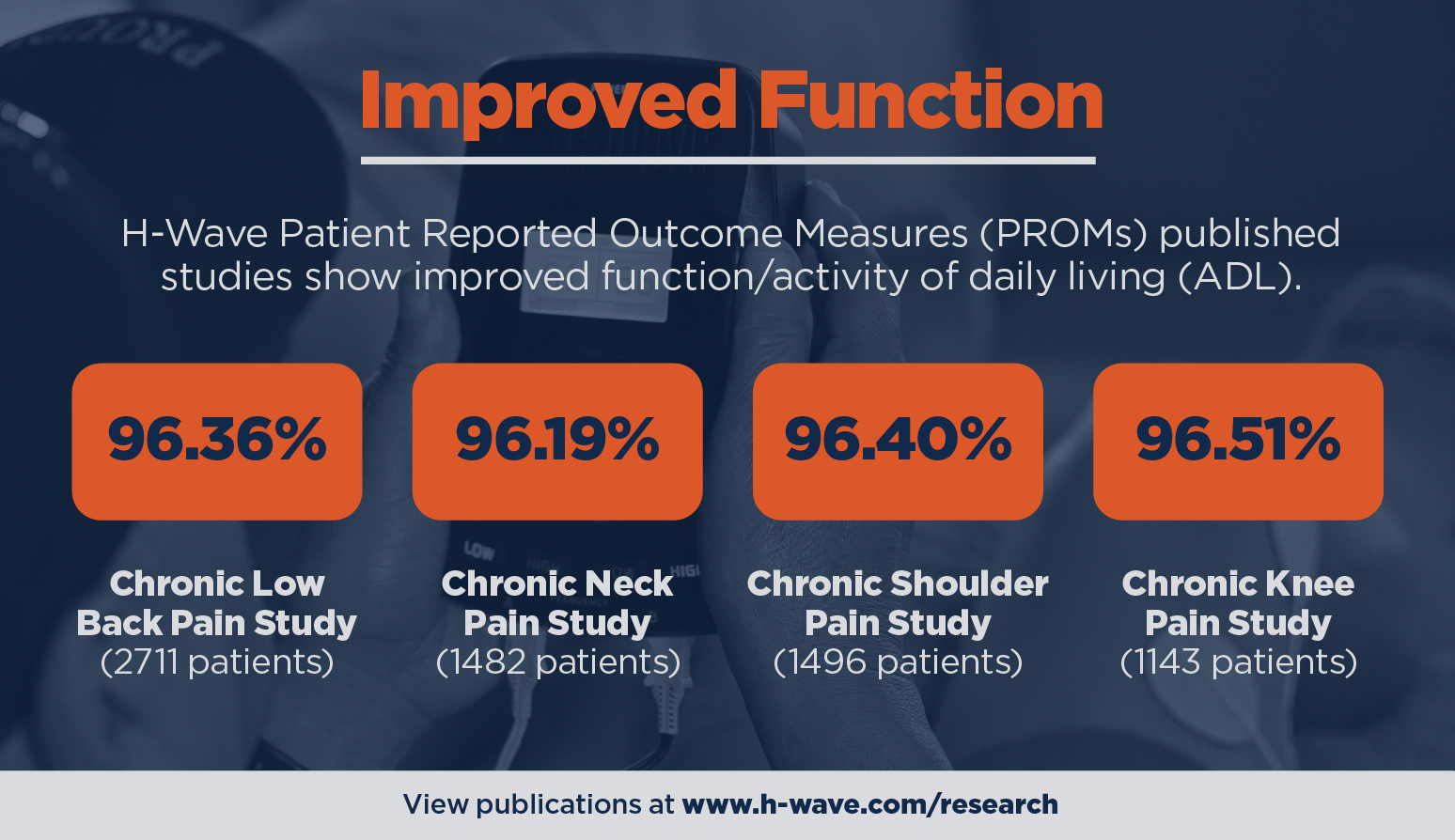
Pain relief matters, but patients ultimately want their lives back – walking the dog, getting groceries, sleeping through the night, and returning to hobbies. In recent PROMs, more than 96% of H-Wave users with chronic back (96.36%)1, neck (96.19%)2, shoulder pain (96.40%)3, and knee pain (96.51%)4 reported improved function and Activities of Daily Living (ADL). Functional gains like these signal real-world progress beyond a pain score. When patients move better, they tend to participate more fully in rehab and maintain momentum between visits. This synergy can accelerate the shift from passive care to active recovery.
H-Wave’s design lends itself to routine use that supports those gains. At home sessions can be scheduled around work or family life, making it easier to build consistency. As pain decreases and function rises, patients are often more willing to attempt graded tasks – climbing stairs, lifting light objects, or taking longer walks. That upward spiral helps reinforce positive habits and adherence. For clinicians, the combination of symptom relief and measurable ADL improvement aligns with value-based care goals and patient-centered outcomes.
- Norwood SM, Han D, Gupta A. H-Wave® Device Stimulation for Chronic Low Back Pain:
A Patient-Reported Outcome Measures (PROMs) Study. Pain Ther. 2024. - Gupta A, Han D, Norwood SM. H-Wave® Device Stimulation for Chronic Neck Pain:
A Patient-Reported Outcome Measures (PROMs) Study. Pain Ther. 2024. - Norwood, S.M., Han, D. & Gupta, A. H-Wave device stimulation benefits chronic shoulder pain
in an observational cohort study of patient-reported outcome measures. Sci Rep. 2025. - Norwood, S.M., Han, D. & Gupta, A. H-Wave® Device Stimulation for Chronic Knee Pain Disorders:
An Observational Cohort Study of Patient-Reported Outcome Measures. Medicina. 2025.
For more H-Wave Published Research, visit: Evidence Based Medicine | H-Wave’s Published Research Studies