H-Wave Therapy Shows to Help Decrease Medication Usage
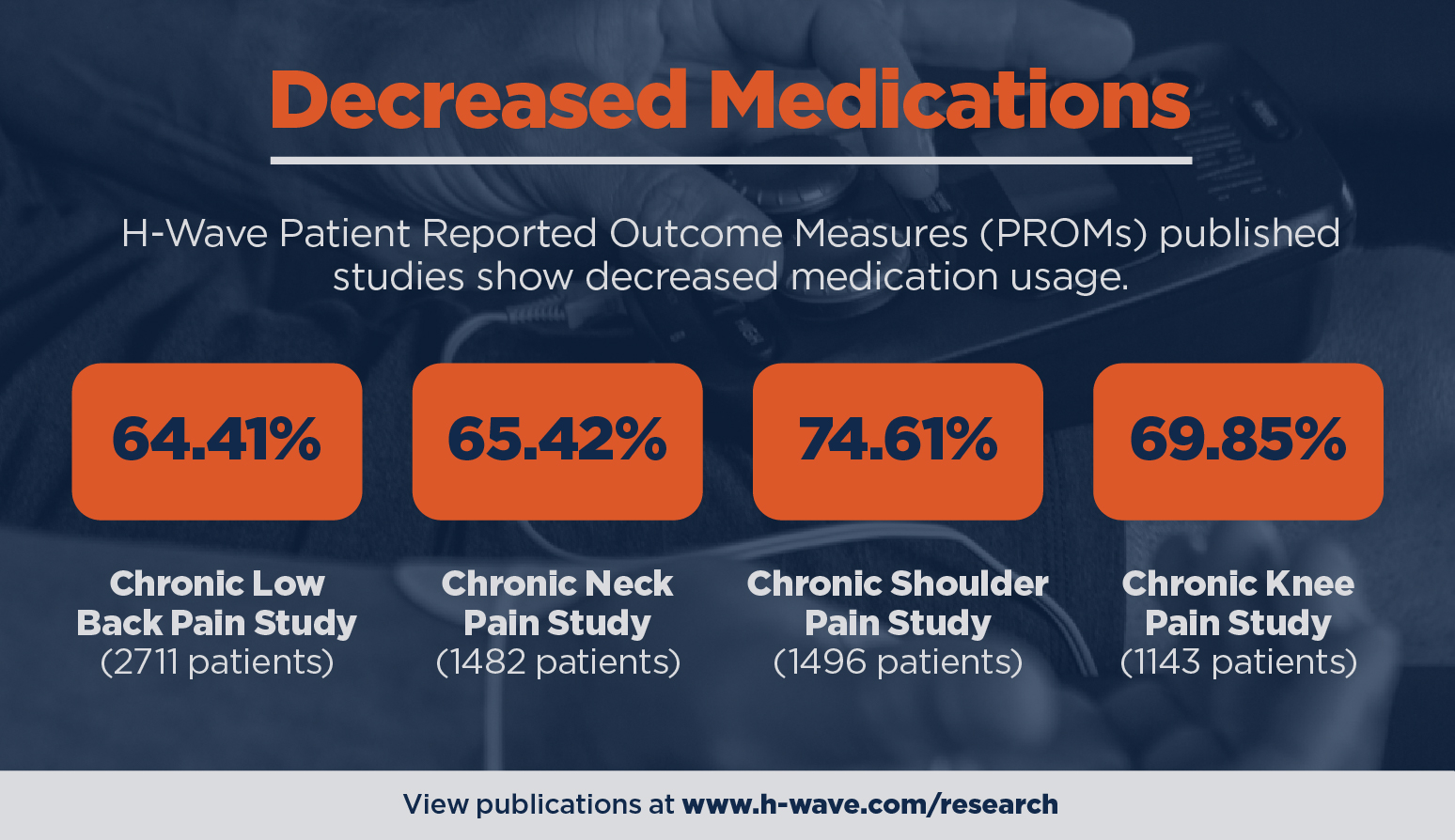
With opioid misuse and dependence still top of mind, many clinics are strengthening non-drug options in their pain pathways. In recent patient-reported data, a sizable portion of H-Wave users decreased medications: 64.41% in chronic back pain, 65.42% in chronic neck pain, 74.61% in chronic shoulder pain, and 69.85% in chronic knee pain. While deprescribing decisions are individualized, these trends suggest H-Wave can help reduce pharmacologic burden for appropriate patients. Lower reliance on medications may help limit side-effects, potential interactions, and risks associated with long-term use. It also supports payer and policy initiatives focused on opioid-sparing care.
Operationally, integrating H-Wave is straightforward and can be paired alongside physical therapy, exercise, and behavioral strategies. The therapy’s comfort profile can encourage frequent use, which is often necessary for lasting benefit. As pain and function improve, providers may find opportunities – when clinically appropriate – to taper certain medications under supervision. This stepwise approach respects patient safety while moving toward durable, non-pharmacologic control.
- Norwood SM, Han D, Gupta A. H-Wave® Device Stimulation for Chronic Low Back Pain:
A Patient-Reported Outcome Measures (PROMs) Study. Pain Ther. 2024. - Gupta A, Han D, Norwood SM. H-Wave® Device Stimulation for Chronic Neck Pain:
A Patient-Reported Outcome Measures (PROMs) Study. Pain Ther. 2024. - Norwood, S.M., Han, D. & Gupta, A. H-Wave device stimulation benefits chronic shoulder pain
in an observational cohort study of patient-reported outcome measures. Sci Rep. 2025. - Norwood, S.M., Han, D. & Gupta, A. H-Wave® Device Stimulation for Chronic Knee Pain Disorders:
An Observational Cohort Study of Patient-Reported Outcome Measures. Medicina. 2025.
For more H-Wave Published Research, visit: Evidence Based Medicine | H-Wave’s Published Research Studies