Improve Work Performance After Injury with H-Wave
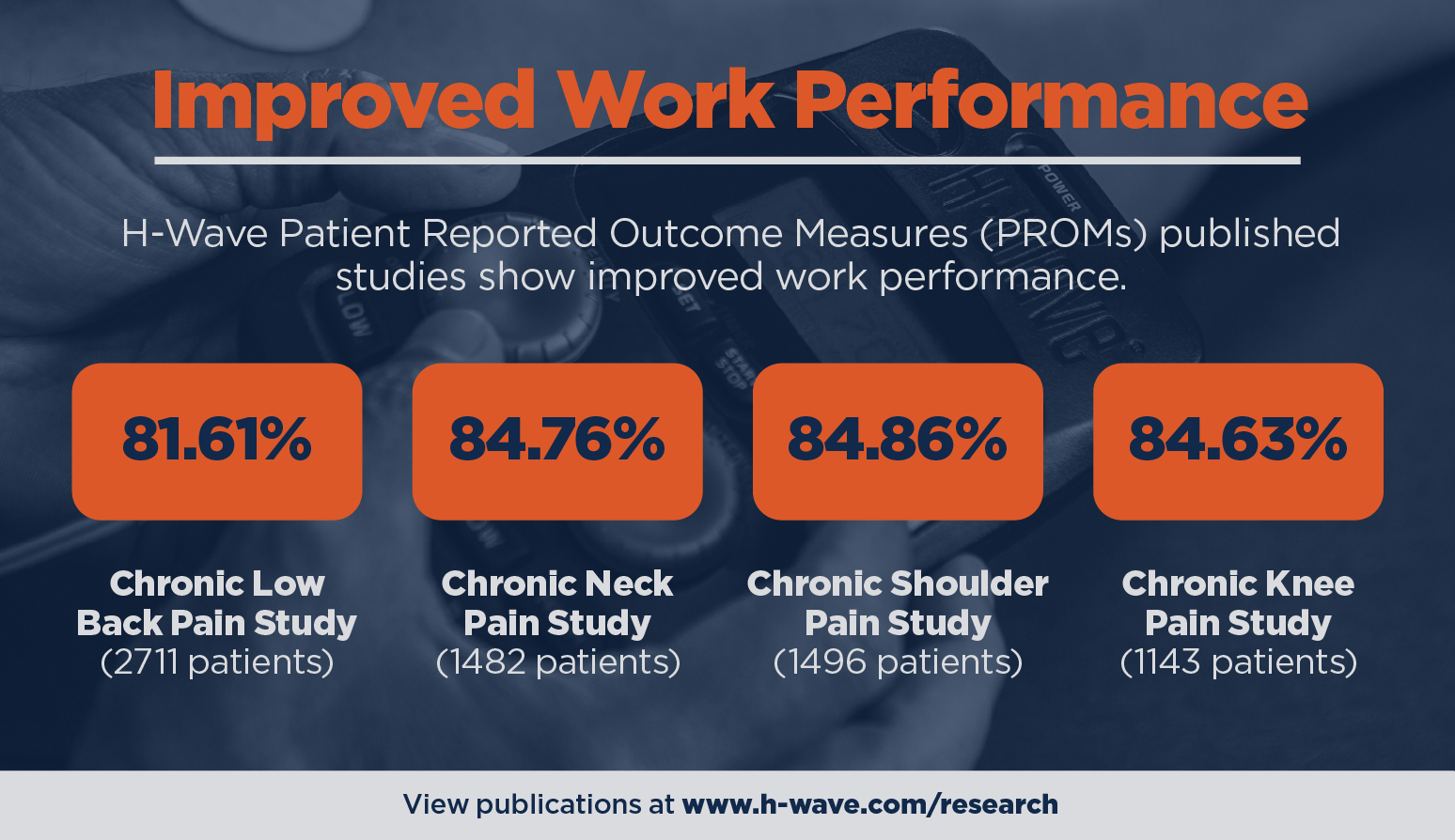
Return-to-work timelines are a critical metric for injured workers, employers, and payers – and they’re deeply influenced by pain and mobility. In the published PROMs, 81.61% of patients with chronic low-back pain, 84.76% with chronic neck pain, 84.86% with chronic shoulder pain, and 84.63% chronic knee pain reported improved work performance while using H-Wave. Better work performance often reflects reduced symptoms plus restored range of motion and task tolerance. That can translate to fewer missed shifts, more productive hours, and safer task execution. For case managers, these improvements support graded duty plans and earlier progression.
Clinically, H-Wave can slot into rehab programs to manage pain while patients build capacity. Patients are more likely to complete therapeutic exercises if discomfort is controlled and muscles are prepared. Over time, that can help sustain work-related function rather than just short-term symptom relief. The non-pharmacologic nature of the therapy avoids sedation or cognitive side-effects that could hinder job performance. Taken together, these factors make H-Wave a practical tool in comprehensive return-to-work strategies.
- Norwood SM, Han D, Gupta A. H-Wave® Device Stimulation for Chronic Low Back Pain:
A Patient-Reported Outcome Measures (PROMs) Study. Pain Ther. 2024. - Gupta A, Han D, Norwood SM. H-Wave® Device Stimulation for Chronic Neck Pain:
A Patient-Reported Outcome Measures (PROMs) Study. Pain Ther. 2024. - Norwood, S.M., Han, D. & Gupta, A. H-Wave device stimulation benefits chronic shoulder pain
in an observational cohort study of patient-reported outcome measures. Sci Rep. 2025. - Norwood, S.M., Han, D. & Gupta, A. H-Wave® Device Stimulation for Chronic Knee Pain Disorders:
An Observational Cohort Study of Patient-Reported Outcome Measures. Medicina. 2025.
For more H-Wave Published Research, visit: Evidence Based Medicine | H-Wave’s Published Research Studies